The second-year Master’s students in Remote Sensing (FRS/IOS), enrolled respectively at Sorbonne University, the Institut de Physique du Globe de Paris/UPC, and the École Nationale des Sciences Géographiques, had the opportunity to discover the operational activities of the European space agencies ESOC and EUMETSAT, located in Darmstadt, Germany.
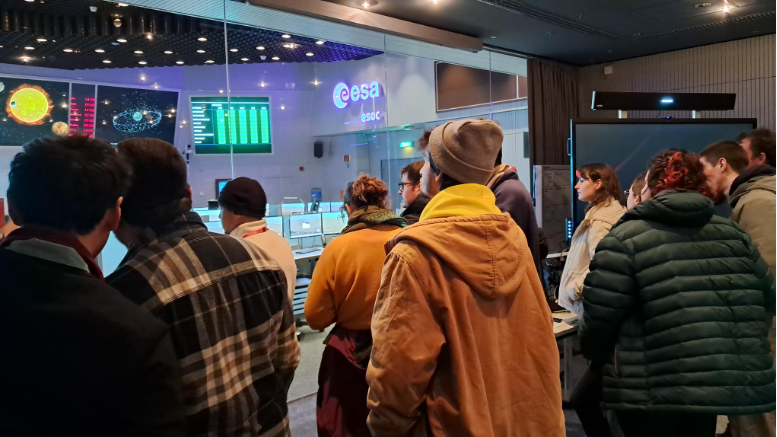
On January 28, the students were welcomed at the European Space Agency’s European Space Operations Centre (ESOC) at 2:30 p.m. by Ms Gerber da Sousa from the Communications Department. The tour of the centre was then led by Mr Gerhard Holtkamp, who introduced the various aspects of ESOC’s activities, from the main control room to the different in-orbit manoeuvres involved in the operation and control of European satellites. He also presented the models of satellites and launch vehicles displayed in the centre’s grounds, explaining their main characteristics and scientific objectives. His presentation was particularly engaging, as Mr Holtkamp, now retired, had worked at ESOC for many years and regularly shared first-hand details and anecdotes from his experience. Daniel Mesples, Spacecraft Operations Manager at ESA, then gave a lecture on the organisation of the European Space Agency, the COPERNICUS/SENTINEL programme and, more specifically, the Sentinel-5P platform. The students had the opportunity to ask questions following the lecture
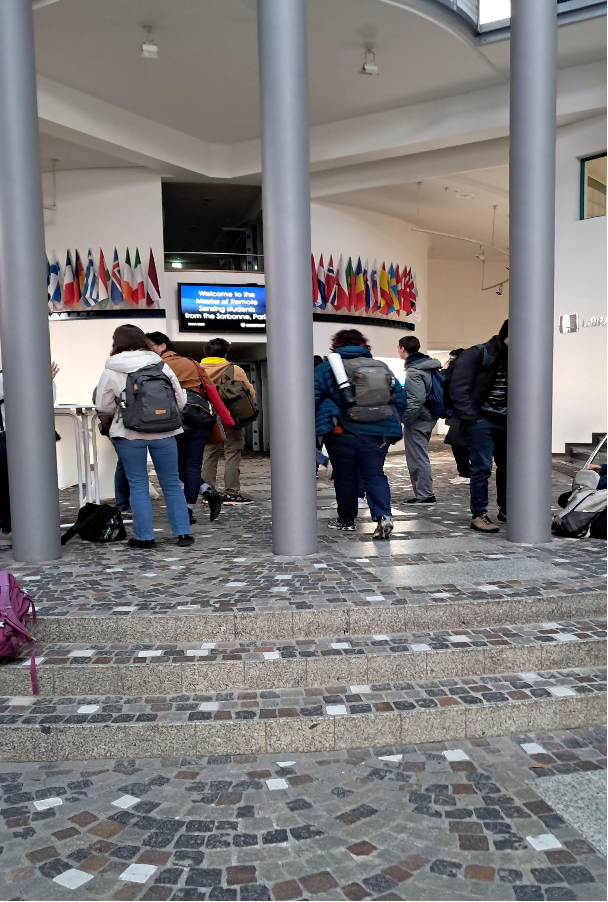
The following day, Mr Doutriaux-Boucher, a climate services specialist at EUMETSAT, welcomed the group in the conference room and introduced EUMETSAT’s role in the monitoring and operation of European meteorological satellites. Together with Ms N. Courcoux, he then presented the control room and the operations carried out there. Mr E. Trollope subsequently gave a presentation on satellite operations, followed by Mr Tahtadjiev, who spoke about data processing and dissemination. The next presentations focused on the development of products and applications, including fire monitoring, presented by Mr J. Chimot, and climate variables, presented by Ms Doutriaux-Boucher. The session concluded with a presentation by the Human Resources Department on internship opportunities and applications to EUMETSAT’s Early Career Programme. Mr Horn then provided commentary on the impressive full-scale satellite models displayed in the outdoor area surrounding the premises.
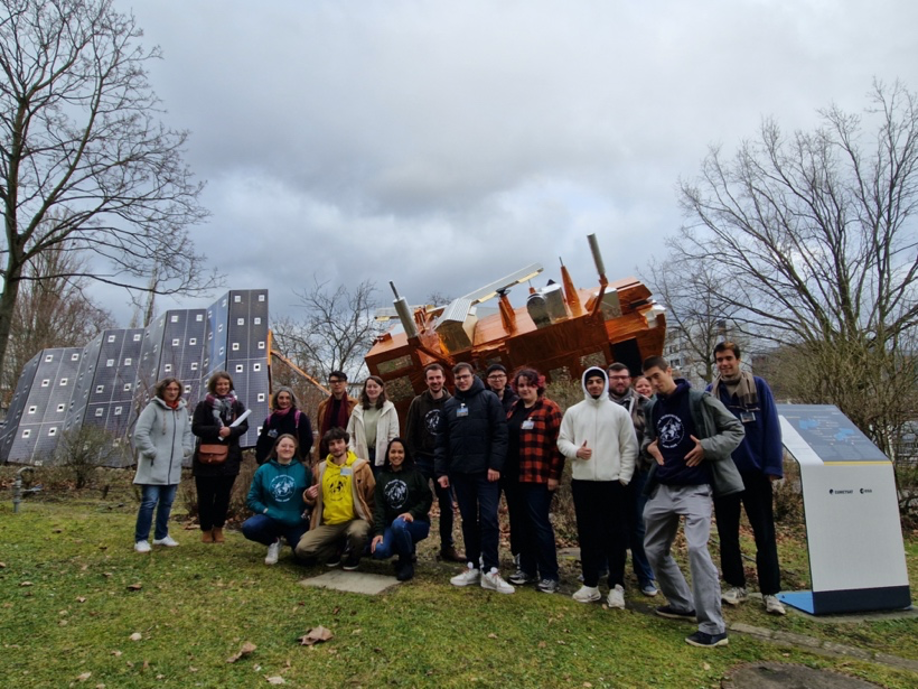
The students were able to continue their discussions with the various morning speakers over lunch, which they shared together.
During these two visits, the students had the opportunity to ask many questions and engage with enthusiastic professionals who were eager to share their passion and experience. Based on the feedback we received from the students, we believe that these two days provided them with valuable insights that will play an important role in sustaining their motivation and helping them shape their future academic and professional choices.